|
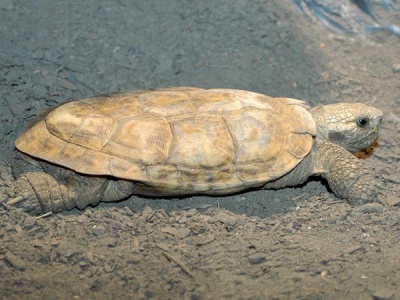
Pancake Tortoise
For more pictures, click Pancake Tortoise Pictures
| | Scientific Name: |
| | Description: |
- The tortoise makes hardy captives.
- This kind of tortoise is one of the oddest of all tortoises, it has a flat and rather soft shell, soft plastron, and has the habit of fleeing rather than withdrawing into its shell when it is disturbed.
- The tortoise is an excellent climber and make its home under rocks.
| | Distribution: |
- These tortoises are found in Kenya, Tanzania and South Eastern Africa
| | Breeding: |
- Incubation 99 - 237 days
- Incubated at around 30 degree celcius
| | Nesting: |
- Normally 1 egg is latched, rarely 2 eggs are latched
- The pancake tortoise's egg is large
- Prior to nesting, the female tortoise is very active
- One of the behavior is digging trial nests in the substrate
| | Size: |
- Adult size is about 6 inches (15cm) in length, 1-1.5 lbs (0.5-0.7kg).
- Mature males have much longer and thicker tails than females.
- Additionally, males tend to be smaller than the females, and the rayed pattern on their scutes less distinct.
| | Lifespan: |
- Captive tortoise can live 25 years or more
| | Diet: |
- Herbivorous (plant-eating); Dry and Fresh Grass, Dark Leafy Greens (e.g. Mustards, Collards, Turnips, Kales)
- Sometimes feed them with Pears, Apples (with skin), Beans (with skin), Peas (with skin) and Carrots is ok
- But never feed them with Very Juicy Fruits, like Tomatos, Bananas, Cabbages, Cucumbers, Bok Choy, Lettuces, Broccoli, etc
| | Tortoise Habitat and Vivarium Housing: |
- Terrestrial, since they are sociable
- Rocky hillsides is their natural habitat
| | Tortoise Common Disease: |
- These tortoises might suffer repeated flagelatte and gut problems such as colic results from excessive of soft fruits feeding, Over juicy food or fruits are not suitable such as tomatos, lecttuce
- Meat shouldn't be given to Pancake Tortoise. It would cause poor bone formation, liver problems, excessive growth, etc
|
|





