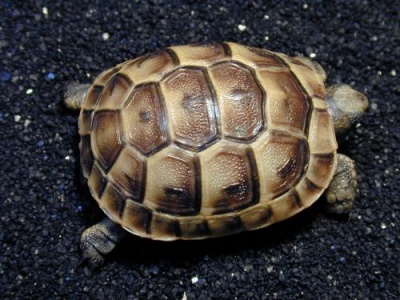
Greek Tortoise
For more pictures, click Greek Tortoise Pictures
|
| Scientific Name: |
| | Description: |
- Also known as Spur Thigh
- The coloration of the Greek tortoise is highly variable and can range from olive with dark spots in the middle of each scute on the carapace to a "golden" form which is almost entirely yellow in appearance.
| | Distribution: |
- Southern Spain, Northern Africa, and Eastern Europe and Middle East
| | Breeding: |
| | Nesting: |
| | Size: |
- Adult carapace size is 6 - 7 inches. Hatchlings average 1� - 2 inches
| | Life Span: |
- Estimated to be over 50 years with proper care
| | Diet: |
- The Greek tortoise is strictly herbivorous. They require a high fiber, low protein and calcium rich diet. Dark leafy greens such as kale, dandelion, mustard, collard and turnip greens should be fed regularly. Natural grasses and hays can also be provided. High protein foods such as commercially prepared dog and cat food and beans should be avoided at all costs since this will eventually cause renal failure due to the excessive protein. Fruits can be given sparingly since too many fruits will result in diarrhea and other health issues. If calcium supplementation is required try to use pure calcium carbonate. The bone of the cuttle fish can also be used and is commonly found in pet shops for calcium supplementation for birds
- Fresh water should be offered at all times in a shallow dish. Your tortoise will also appreciate a 10-minute soak in a shallow bath water to ensure proper hydration
| | Habitat and Vivarium Housing: |
- Greek tortoise need a vivarium with a temperature setting of 75�F - 85�F
- UVA and UVB lighting should be also provided to enhance the shell development
- The vivarium should be cleaned daily using the reptile-safe cleaner. It's healthier for your tortoise
|
|





