|
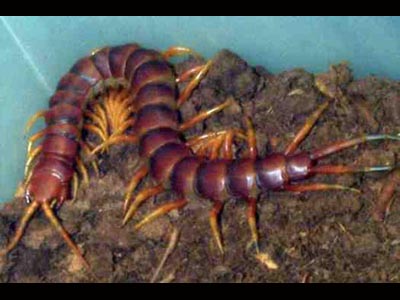
Peruvian Giant Centipede
For more photos, click here...
|
| Scientific Name: |
- Scolopendra gigantea robustaOther names: Peruvian Centipede, Peruvian Giant Yellow Leg Centipede, and Peruvian Giant Orange Leg Centipede
|
| Description: |
- Peruvian Giant Centipede / Scolopendra sp. may be the world's largest centipede species.
- These centipedes are fast and aggressive but are actually supposedly one of the calmer centipede species.
- For more information, refer to the following:
|
| Distribution: |
- Northern part of South America, Brazil and Peru
|
| Breeding: |
|
| Nesting: |
|
| Size: |
- Adult size is from 7- 11 inches
|
| Life Span: |
|
| Diet: |
- Adults will consume almost any creature that is not larger that itself, including large cricket, cockroaches, small mice and even fuzzy rats.
- Babies will eat pinhead crickets or other small insects.
|
| Habitat: |
- Terrestrial
- Temperature 75 to 85 F.
- Put 2 to 3 inches of soil, moss, barks. with 75 to 85 % of humidity.
|
| Cage: |
- Cage should be wide for terrestrials and twice as long of the full grown size.
-
Centipedes are good escape artists, so make sure the tank is tall and escape-proof. Make sure it is escape-proof.
-
A small water dish to be available in the cage at all time.
-
A hidding place is essential for its privacy, security and sleep by day.
-
No decorations are required
-
Try to include caves etc |
| Note of Caution: |
- ALL centipedes have a certain amount of venom.
-
Although most people would not die from this species, some people may be allergic to the venom, or more sensitive, making it a dangerous situation.
-
This is one of the reasons that people should not handle this centipede, affects of this centipedes' natural defenses may vary between people.
-
All centipedes should be considered dangerous, so be careful, because you don't want to find out if you are allergic or more sensitive the HARD WAY!
|
|





